Modern Commercial Buildings Run on High-Performance Cabling
Across offices, schools, healthcare facilities, and mixed-use commercial properties, one clear infrastructure trend has emerged in 2026: fiber optic cabling is rapidly becoming the standard backbone for reliable, high-speed data and video networks in everyday buildings—not just in massive tech campuses.
Owners and facility managers are looking beyond short-term bandwidth fixes and investing in cabling that can support higher-speed internet, multi-tenant connectivity, security and surveillance, and advanced audiovisual systems for years to come. Fiber-based infrastructure is proving to be the most effective way to future-proof these environments while avoiding frequent rip-and-replace upgrades.
Why Fiber Is Taking Over Commercial Cabling
Longer Distances and Higher Speeds
Traditional twisted-pair cabling, such as copper Category cabling, is limited to about 100 meters per run for network links, which can be restrictive in larger facilities or campuses. Fiber optic cabling easily surpasses these distance limitations while supporting network speeds well beyond 10 Gbps, making it ideal for connecting main distribution frames (MDFs) to intermediate distribution frames (IDFs), remote buildings, and edge equipment rooms.
In practical terms, this means fewer intermediate switches, better performance over long pathways, and more flexibility in how you lay out telecom rooms and network closets. As organizations add more connected systems—from security cameras and access control to collaboration tools and building automation—fiber ensures the backbone can handle the growing load.
Superior Reliability and Signal Integrity
Fiber optic systems offer strong immunity to electrical noise, surges, static, and lightning, making them inherently more reliable than copper in environments with heavy electrical equipment or longer outdoor runs. This resilience helps prevent intermittent performance issues that can be difficult to diagnose and costly to fix.
Because fiber transmits light instead of electrical signals, it maintains signal quality over extended distances and protects critical services from many of the interference problems that can affect copper installations. For organizations that depend on stable connectivity for operations, security, and communications, this reliability is a major advantage.
Fiber in Everyday Building Systems
Structured Data and Network Backbones
In many modern commercial buildings, fiber is now used from the demarcation point (where service enters the building) all the way through MDF/IDF interconnects and key distribution links. Multi-strand fiber trunks—such as 6-strand or 12-strand cable assemblies—are commonly deployed to provide enough capacity for multiple network segments, VLANs, or tenant networks without having to re-cable as demand grows.
These fiber trunks support core switching environments, uplinks between floors, and high-speed connections to network applications like backup, virtualization platforms, and shared storage. When designed properly, they create a robust, scalable backbone that can adapt to changing technology over time.
Support for Modern Video and AV
Video resolution and content demands have exploded, and cabling has had to keep pace. Fiber optic cabling is increasingly used to extend HDMI, DisplayPort, and other video signals over long distances while supporting native 4K HDR and even 8K resolutions, with headroom for future standards like 12K and 16K.
Conference rooms, digital signage, training spaces, and large presentation environments benefit from fiber-based distribution because it maintains video quality, reduces latency, and allows centralization of equipment without sacrificing user experience. This makes fiber an ideal choice for commercial AV systems and media-rich spaces.
Security, Surveillance, and Multi-Tenant Connectivity
Commercial properties rely heavily on IP-based security cameras, access control systems, and monitoring platforms. Fiber backbones provide the bandwidth and consistency needed to support dozens or hundreds of camera streams, multiple recording servers, and remote viewing without bogging down the primary business network.
In multi-tenant buildings, fiber can be used to segment and distribute connectivity to different suites or floors, supporting separate networks while leveraging a shared physical infrastructure. This approach simplifies service delivery, supports higher-speed internet offerings, and keeps tenants happier with their connectivity options.
Designing Fiber Infrastructure for Real-World Buildings
Strategic MDF–IDF Planning
A future-ready fiber design starts with a clear plan for how the main distribution frame connects to all intermediate distribution frames and key equipment locations. Planning fiber trunks between these points ensures that each floor, wing, or building has enough capacity for current and future systems.
Common practice is to run multi-strand single-mode (OS2) fiber between MDF and IDFs, giving designers flexibility to allocate fibers to different networks, services, or tenants as needs evolve. This structured approach keeps the backbone clean and allows incremental growth without major disruption.
Choosing the Right Fiber Types and Enclosures
Single-mode fiber is often the best choice for demarcation wiring and long building runs because it supports very high speeds over extended distances. Within shorter runs or specialized AV systems, appropriately selected multimode fiber can also be used, depending on equipment and performance requirements.
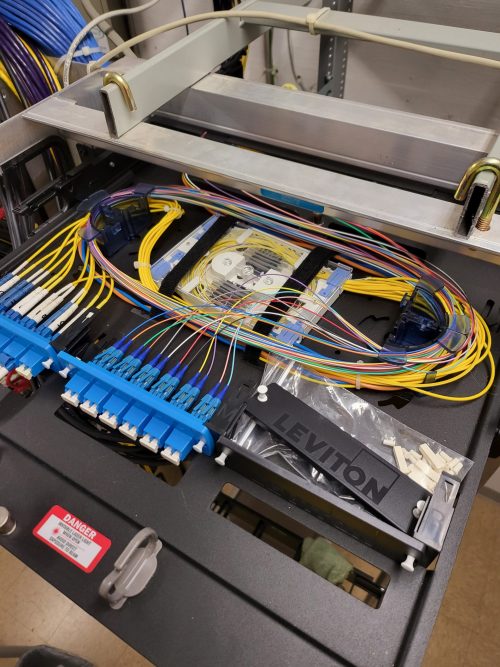
Fiber-ready rack trays, wall boxes, and patch panels are critical for managing terminations and patching in MDFs and IDFs. These enclosures protect fibers, organize connections, and make moves, adds, and changes safer and more efficient. Good enclosure design directly affects uptime and serviceability.
Integration with Copper and Wireless Networks
Fiber does not replace copper; it complements it. A robust fiber backbone feeds switches and wireless access points, while copper Category cabling connects individual workstations, devices, and local equipment. This layered approach provides the best combination of reach, speed, and cost-effectiveness.
As Wi-Fi 6/7 deployments and dense device environments become more common, strong fiber backbones ensure that wireless networks have the necessary capacity and backhaul to perform well, rather than becoming a bottleneck.
Business Benefits of Future-Ready Cabling
Reduced Long-Term Costs and Fewer Disruptions
Investing in fiber-based infrastructure reduces the likelihood of having to re-cable or redesign your backbone every few years as bandwidth needs increase. Longer cable lifecycles and higher capacity translate into lower long-term costs compared to repeatedly upgrading underpowered copper systems.
Because fiber installations are designed for growth, organizations can add services, devices, and systems without major shutdowns or construction. This continuity protects daily operations and reduces the risk of downtime during upgrades.
Enhanced Competitiveness and Tenant Appeal
For building owners and property managers, offering robust connectivity is now a competitive differentiator. Tenants expect high-speed, reliable networks for everyday work, collaboration, and specialized applications. Fiber-enabled buildings are better positioned to attract and retain businesses that rely on connectivity.
For organizations that own their facilities, strong network infrastructure directly supports digital transformation efforts—whether that means cloud adoption, upgraded communications platforms, or advanced security and monitoring solutions.
Why Partnering with Advanced Commercial Communications Matters
Design, Installation, and Long-Term Support
Building a future-ready cabling infrastructure requires more than just pulling fiber; it demands thoughtful design, standards-based installation practices, and accurate documentation. Advanced Commercial Communications specializes in low-voltage and telecommunications infrastructure for commercial buildings, schools, and public agencies.
Our team plans MDF–IDF layouts, selects the right fiber types and enclosures, and integrates structured cabling with copper and wireless systems. We focus on clean, scalable designs that align with your facility’s current needs and long-term goals, so your cabling plant becomes a strategic asset—not just an afterthought.
Experience with Real-World Systems
Beyond backbone design, we understand the everyday systems that depend on your cabling: security cameras, access control, classroom technology, office networks, and specialized AV. This practical experience allows us to design fiber and cabling solutions that support real workloads, not just theoretical bandwidth numbers.
Whether you are upgrading an older facility, building out a new space, or connecting multiple locations, Advanced Commercial Communications can help you navigate product choices, standards, and implementation details to ensure a smooth, reliable deployment.
Conclusion: Make Your Cabling Infrastructure Work for the Future
Fiber optic cabling is no longer reserved for niche applications—it has become the backbone of modern commercial buildings, supporting high-speed data, video, security, and multi-tenant connectivity with reliability and room to grow. By planning MDF–IDF fiber backbones, choosing appropriate enclosures, and integrating fiber with copper and wireless networks, you can build an infrastructure that serves your organization for many years.
Partnering with a specialized low-voltage contractor like Advanced Commercial Communications ensures that this work is done right the first time, with an eye toward scalability, performance, and everyday usability.
Ready to future-proof your building’s cabling? Contact Advanced Commercial Communications today to discuss your next infrastructure project and explore how fiber-based solutions can support your goals.